
News
Boarding at Grammar: A Four-Generation Story
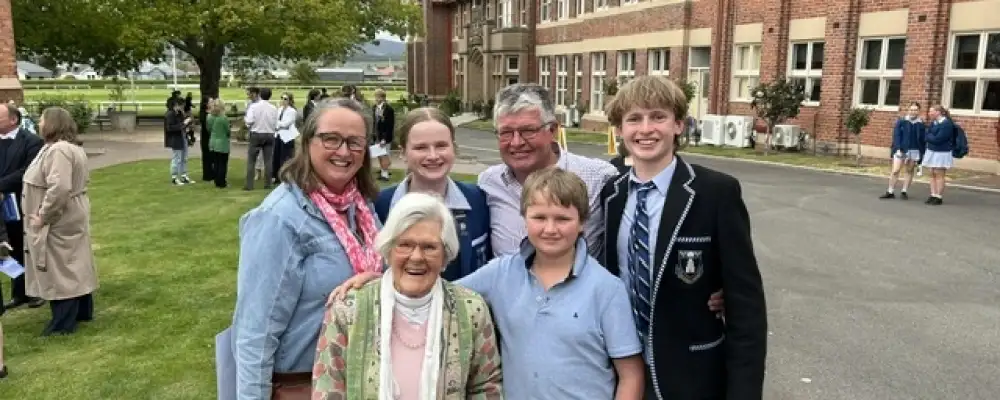
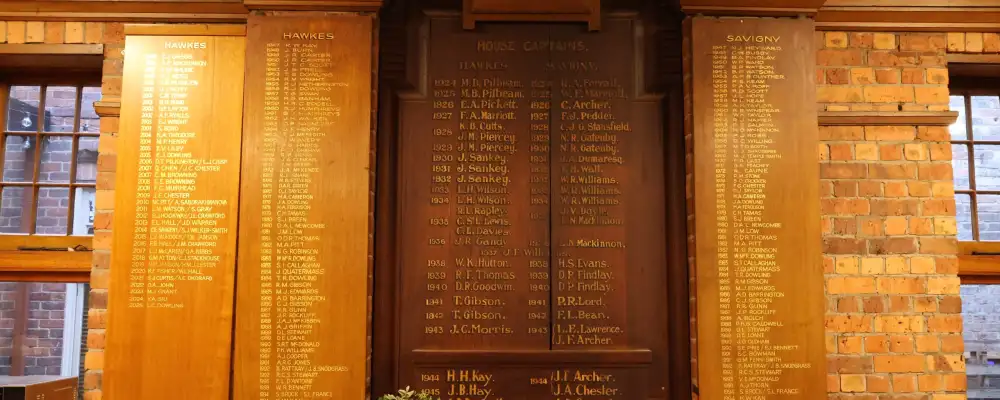
Some families have a connection to Launceston Church Grammar School that goes beyond simply just attending. For Richard (1984) and Jo Dowling, that connection spans four generations, from a grandfather who helped dig the original swimming pool (now the main carpark), to children who today look up in the Hawkes Dining Hall and see their family name written on the School’s honour board. Richard and Jo shared with us what boarding has meant to their family, how it has changed over the decades, and why, after all this time, Grammar still feels like home.
1. Your family has a long history with Launceston Grammar. Can you tell us about that connection?
Richard:
I was the third generation of my family to attend Launceston Grammar, and now my children are the fourth. My grandfather (Edward Dowling, 1928) attended before my father, and Dad (Timothy Dowling, 1953) was here in the early 1950s. Family stories go back even further, my grandfather was one of the boarders who helped dig the original swimming pool that used to sit near the Chapel. We've had Dowling family members coming through the School for generations, so it's a connection we're very proud of.
2. When it came time to choose a school for your own children, how much did that family history influence your decision?
Jo:
The old school tie certainly played a part, but we didn't choose Grammar simply because of history. We visited different schools and looked carefully at what would best suit our children. We wanted to know they would feel safe, supported and able to thrive. Ultimately, Grammar felt like the right fit for our family.
3. What does boarding look like for your family today?
Jo:
Our children, Nick and Digby, are weekly boarders. Living in Campbell Town, the daily commute would be long, so boarding gives them access to everything the School offers while still allowing them to come home on weekends. It means they can participate fully in sport, co-curricular activities and boarding life while maintaining strong connections with home and our farming community.
4. Richard, how does boarding today compare with your own experience in the 1980s?
Richard:
There are plenty of similarities, but also some big differences. When I was a boarder there were around 125 students in the boarding house; today there are about 50. In my year, 15 boys shared a dormitory. We had great friendships, but very little privacy!
Today's students have a lot more personal space, more opportunities to have their voices heard and stronger connections across grade levels. The senior students play an important role in supporting the younger boarders, which is fantastic to see.
5. What has remained unchanged about the boarding experience?
Richard:
The friendships. Living alongside people every day creates strong bonds. Some of my closest school friends are people I still keep in touch with today. Even if we don't speak for years, we can pick up exactly where we left off. That's one of the lasting gifts of boarding.
6. How important is the boarding community to the wider School?
Richard:
I think boarders are very much the heartbeat of a school. They're on campus all the time, involved in weekend sport, school events and community activities. They develop a strong sense of ownership and connection to the School because it's not just where they learn, it's where they live.
Jo:
Boarding students also develop independence and resilience. They learn to manage themselves, build relationships and solve problems. Those are life skills that stay with them long after school.
7. How has boarding helped prepare your children for life beyond school?
Jo:
Our daughter Lucinda (2025), who is studying Occupational Therapy in Melbourne, is a good example for this. Moving interstate and living in a residential college was a big step, but boarding had already given her the confidence to make new connections, manage her own routines and settle into a new environment.
Richard:
I found the same thing when I left school. Boarding helps you become independent earlier, while still having support around you. It's a great bridge between family life and adulthood.
8. What opportunities has boarding made possible for your children?
Jo:
It has allowed them to access opportunities that simply wouldn't have been possible from Campbell Town. Our son Nick has been heavily involved in sport and rowing, experiences that would have been difficult without boarding. More broadly, boarding gives our children the freedom to participate in whatever interests them, whether that's sport, performing arts or other co-curricular activities.
9. What does it mean for your children to be the fourth generation of Dowlings at Grammar?
Jo:
There have been moments when they've looked up in the dining hall and seen our family name connected to earlier generations. That's given them a real sense of pride.
Richard:
It's special. They know they're part of something bigger than themselves. It's not about following a family tradition for the sake of it but understanding that others have walked the same path before them.
10. What would you say to families considering boarding at Launceston Grammar?
Jo:
Boarding today is very different to what many people imagine. The best thing families can do is visit, ask questions and experience the culture for themselves. What stands out to us is the sense of care, connection and belonging.
Richard:
Boarding offers the best of both worlds. Students gain independence while still having strong support around them. They learn to build relationships, take responsibility for themselves and make the most of the opportunities available. For our family, it's been an incredibly positive experience across four generations.
__________________________________
For the Dowlings, boarding at Grammar is not simply a tradition, it is a living, evolving experience that has shaped each generation in its own way. From the 15-boy dormitories of the 1980’s to the close-knit community their children are part of today, what has remained constant is the sense of belonging, the depth of friendship, and the confidence that comes from learning to stand on your own two feet while knowing support is close by. It is that combination of independence and connection that Richard and Jo believe makes boarding such a formative experience. And if the next generation of Dowlings is any indication, the story is far from over.